




What Is Triton Tempo? Triton Poker’s New Timing System Explained

pessi-lamm
21 Mar 2026
Pessi Lamm 21 Mar 2026
Share this article
Or copy link
  • Triton Tempo introduces structured timing for poker, enhancing decision-making.
  • Late players get less time, rewarding early participants and reducing stalling.
  • Time management is adaptive and flexible, enhancing strategic depth in tournaments.
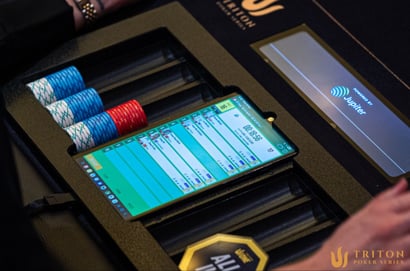
Triton Tempo interface
A closer look at the Triton Tempo dealer interface (credit: tritonpokerseries.com)
Triton Jeju 2026 introduced the new Triton Tempo system in March, bringing more structure to live poker through decision windows, tracked time banks, and a format designed to cut down on stalling.

It is easy to describe Triton Tempo as just a new poker clock, but that does not fully capture what it does. Keep reading to see how it works.

Triton Tempo: A Clearer Timing Framework

Instead of handling time in clunky chunks, Triton Tempo starts every decision with a built-in window.
That baseline looks like this:
  • 15 seconds preflop in no-limit hold’em
  • 20 seconds preflop in pot-limit Omaha
  • 25 seconds on the flop
  • 30 seconds on the turn and river
Once that baseline runs out, the system starts using the player’s own banked time.

The Personal Tempo Clock That Grows With The Tournament

Another useful feature is that Triton Tempo recognizes that later stages need more thought, not less.
Players can receive extra time:
  • After late registration ends
  • At the beginning of final-table play
  • In smaller amounts in faster formats
  • Through adjusted rules for longer premier events
That means the system is not simply “fast poker.” It is structured poker with staged flexibility.

Why Some Players Start With Less Time

Late entrants are given less bank time than players who were seated from the opening level.
The reasoning is straightforward:
  • They have skipped a portion of the tournament
  • They have faced fewer actions and fewer difficult decisions
  • The policy rewards players who are present and ready when play begins
It is both a practical and behavioural incentive.

How Table Management Works

The system is operated by the dealer, who controls the clock interface at the table.
A few operational points make it work:
  • The active timer moves as action moves
  • Staff can make updates if players are reseated
  • A player’s time travels with them when tables break
That avoids a major problem older systems can create, where timing tools are tied too closely to a seat rather than to the player.

Error Correction And Expired Time

Triton Tempo is strict, but it is not blind.
If something unusual happens:
  • Tournament staff can correct a timing mistake
  • A wrong clock assignment can be fixed manually
  • A player with no bank left still gets the standard base time on future hands
A hand only becomes dead when all time for that specific decision is gone. If no action is facing the player, the system checks automatically.

Why Triton Tempo?

Triton Tempo is interesting because it improves pace without removing depth.
That is the line live poker has been trying to find for years. If Triton gets it right, this could become one of the most copied tournament innovations in the game.

The new system was backed by a clear vision and strong feedback from the players:

Through 10 years on the Triton Poker Series, we have collated an enormous amount of data relating to all aspects of poker tournament play. After analysing this data, and discussing the issue with players, floor supervisors and dealers, we have been able to determine what we think is a fair amount of time to make most decisions.As with everything at Triton, we listen to feedback from all relevant parties and can make adjustments as necessary.


Upcoming Events